Showing posts with label bible. Show all posts
Showing posts with label bible. Show all posts
Monday, December 25, 2023
How the First English Bible Originated (Vos on Wycliffe)
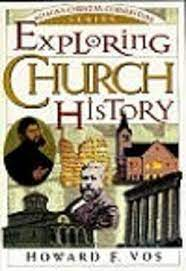
"He [John Wycliffe] also engaged in Bible translation, and it was largely through his influence that the first English version was produced. Though he personally translated or supervised translation of parts of the Bible, his version was not completed until after his death, by Nicholas of Hereford and John Purvey. Without doubt, its widespread use had an influence on the development of the English language" (Howard Vos, Exploring Church History, page 78).

Thursday, November 23, 2023
Scriptures for Encouragement and Support
1) Isaiah 33:24; 35:1-5; 41:10-13; 43:1-7; 59:1.
2) Psalm 23:1-6; 34:19; 41:1-3; 56:8; 68:19; 145:14, 18; Job 14:13-14.
3) Matthew 11:28-30; Revelation 21:3-5; Deuteronomy 31:6; Hebrews 13:4-6;
4) 2 Corinthians 1:1-9; 4:7-10, 16-18; 7:4-7; 12:9-10.
5) Philippians 4:6-9; 1 Chronicles 7:20-22; 1 Peter 5:6-7; James 5:11.
Tuesday, August 11, 2020
When Did the Early Christians Accept Four NT Gospels? (Peter Williams)
Peter Williams presents an interesting line of evidence for early acceptance of the four Gospels. He argues that the four Gospels were a recognized unit by the late second/early third century, and three things demonstrate this point:
1) "The Chester Beatty Library in Dublin houses a manuscript called Papyrus 45, which contains the four Gospels and the book of Acts. This manuscript was produced in southern Egypt, probably in the first half of the third century."
2) "Going back a little further, we find that Irenaeus, bishop of Lyon in France, writing around the year AD 185, said that God gave the gospel in fourfold form, referring to the four Gospels."
3) "Even earlier than this, perhaps around the year 173, a man called Tatian had made a single chronologically ordered retelling of the story of Jesus based on the four Gospels. This work, which became known as the Diatessaron, was most probably produced in Syria. Though it does not survive today, it is believed to have influenced many harmonies of the Gospels in the Middle Ages."
Conclusion: "Thus, by the early third century, evidence from France, southern Egypt, and Syria all shows that the four Gospels were held to be a special collection that belonged together.4 In other words, these four books were treated together as the best source for information about Jesus long before any central city, group, or individual in Christianity possessed enough power to impose the collection on other people. It is most natural to suppose that the credentials of the four books themselves are why they were so widely accepted."
See Peter J. Williams, Can We Trust the Gospels?
Subscribe to:
Posts (Atom)