Saturday, May 04, 2019

Witherington Discusses Bad Language

Ben Witherington wrote an interesting blog post about "mature" or "adult" language. See https://www.patheos.com/blogs/bibleandculture/2019/02/25/about-mature-or-adult-language/#comment-4360436403

I agree with Witherington when he expresses dismay at people referring to profanity as "mature language." No, as he says, profanity and crude lingo "is juvenile, immature, it's the kind of language teenagers use to seem like they are all grown up (and they aren't)."

Something else to consider (noted in Witherington's blog post) is that what we say could be a reflection of our thinking and of what we regularly assimilate: garbage in, garbage out. Ephesians 4:29-32 provides fitting counsel on speech that's pleasing to Jehovah. Compare Eph. 5:1-5.

In Eph. 5:12, Paul stated: "For it is shameful even to mention what the disobedient do in secret." (NIV)

So it's not only profanity that Christians must avoid; even mentioning (in sordid detail) what the nations secretly do might be shameful. A Christian is obligated to speak in a way that befits God's holy people: it is possible that Paul knew about the Greek comic Aristophanes or the Latin poet, Martial. He likely would have found their writings to be crude and unholy--especially the writings of Martial.

Harold W. Hoehner makes this observation about Eph. 5:12:

The infinitive λέγειν normally is translated “to speak” but this rendering seems clumsy here. Rather, the translation “to mention” would heighten the ascensive idea of the conjunction. Kreitzer suggests that those things too shameful to mention may have to do with the ritual obscene language associated with the mother-goddess Demeter.[69] Although this could be the case, there is nothing in the text to suggest such a specific reference. It is more likely that Paul has in mind useless deeds in which believers are not to participate. But if these works are so bad that it is shameful to even mention them, why expose them? Exposing such things not only reveals unfruitful works but teaches believers two important lessons. First, it reveals the ugliness of the deeds done in secret. Second, it impresses on them the importance of producing the fruit of light, the works of goodness, righteousness, and truth (v. 9). Deeds of darkness cannot be allowed, therefore, to spread and encompass the community of believers

See Hoehner, Ephesians: An Exegetical Commentary.

John Eadie quotes Herodotus 1.138 when explaining Eph. 5:3, ποιέειν οὐκ ἔξεστι, ταῦτα οὐδὲ λέγειν ἔξεστιν.

See https://www.studylight.org/commentaries/jec/ephesians-5.html

http://www.perseus.tufts.edu/hopper/text?doc=Perseus%3Atext%3A1999.01.0126%3Abook%3D1%3Achapter%3D138%3Asection%3D1

Thursday, May 02, 2019

William Ockham the Nominalist?

I once read a book about William Ockham (Occam) rather quickly--it's written by Matthew C. Menges (O.F.M., Ph.D.) and the book is quite detailed. One important point struck me in this work:

"Nor can we say that Ockham is a nominalist, if nominalism means a denial of universal concepts, for he surely holds them. His universal knowledge is founded ultimately on intuition, cognitio in se, and so it is knowledge of reality. But we do not know God immediately, or in se" (The Concept of Univocity Regarding the Predication of God and Creature According to William Ockham, page 175).

So do you think we should avoid describing Ockham as a nominalist? I guess it depends on how one defines nominalism.

Anthony Kenny concurs with Menges: he calls Ockham a terminist.

Monday, April 29, 2019

Translating 1 Corinthians 11:20: Deipnon-Part II

Greek: Συνερχομένων οὖν ὑμῶν ἐπὶ τὸ αὐτὸ οὐκ ἔστιν κυριακὸν δεῖπνον φαγεῖν,

Admittedly, most translations usually render 1 Cor. 11:20 as "Lord's supper," but does this mean "evening meal" is a mistranslation or wrong? What I've found is that "Lord's supper" or some variant thereof is largely governed by tradition.

The context of 1 Cor. 11:20 lends itself to the translation "evening meal." For instance, 1 Cor. 11:23 states:

"For I received from the Lord that same thing that I handed on to you, that the Lord Jesus, on the night when he was to be arrested, took bread" (Byington)

Paul explicitly writes that Jesus instituted his deipnon at night, and we know that Christ likely introduced this meal after Passover, which occurred that night of Nisan 14 even though another proposed date is Nisan 15. In any case, the evidence suggests a nocturnal observance of the Lord's deipnon. Are there other indications that "evening meal" is not a mistranslation?

"The common noun, deipnon, was used for the main daily meal, usually taken in the evening; see Luke 14:12 (cf. Luke, 1047). It could also denote a festal meal or banquet (Luke 14:16, 24)." (Fitzmyer, First Corinthians, 434).

John 13:2, 4 speaks of the deipnon held by the Lord, and this observance occurred at night. Compare John 13:30. See George L. Parsenios, Departure and Consolation: The Johannine Farewell Discourses in Light of Greco-Roman Literature, 117.

Parsenios writes: "John's Last Supper scene is roughly modeled on the symposium format. It is a deipnon followed by a communal gathering" (page 123).

For information on how writers use deipnon in the Septuagint, see https://lexicon.katabiblon.com/index.php?lemma=%CE%B4%CE%B5%CE%B9%CF%80%CE%BD%CE%BF%CE%BD&diacritics=off

Also see https://referenceworks.brillonline.com/entries/brill-s-new-pauly/deipnon-e313040

Thursday, April 25, 2019

Stanley Porter and P.Egerton 2 (Dating the Gospel of John)

This quote comes from Stanley E. Porter; it is part of a longer discussion in his book John, His Gospel, and Jesus: in Pursuit of the Johannine Voice:

As almost every scholar who works with ancient manuscripts admits, the dating of manuscripts is extremely difficult when all one has is undated manuscripts for comparison. Nevertheless, the development of a timeline or trajectory is necessary. The evidence that I have analyzed above indicates that the order of writing of the manuscripts discussed above was as follows: the canonical Gospel of John, probably 70-90, which would ensure that there was enough time for it to be circulated, copied, and transmitted to Egypt, where it was then used and copied further; then P.Rylands Greek 457 around 100-120, although the absence of the nomina sacra, if they were introduced around 100, may possibly push the date even earlier; and then P.Egerton 2 copied sometime from the mid to late second cen- tury, perhaps around 170.

For more on P.Egerton 2, see http://www.bl.uk/manuscripts/FullDisplay.aspx?ref=Egerton_Papyrus_2

Monday, April 22, 2019

Translating 1 Corinthians 11:20: Deipnon--Part I

Greek: συνερχομένων οὖν ὑμῶν ἐπὶ τὸ αὐτὸ οὐκ ἔστιν κυριακὸν δεῖπνον φαγεῖν,

ESV: "When you come together, it is not the Lord's supper that you eat."

ASV: "When therefore ye assemble yourselves together, it is not possible to eat the Lord’s supper:"

Authorized KJV: "When ye come together therefore into one place, this is not to eat the Lord’s supper."

NWT 2013: "When you come together in one place, it is not really to eat the Lord's Evening Meal."

Bill Mounce on δεῖπνον:


Definition:
pr. a meal; supper, the principal meal taken in the evening, Lk. 14:12; Jn. 13:2, 4; meton. food, 1 Cor. 11:21; a feast, banquet, Mt. 23:6; Mk. 6:21; 12:39

See https://www.billmounce.com/greek-dictionary/deipnon

Mounce's Complete Expository Dictionary: Noun: δεῖπνον (deipnon), GK 1270 (S 1173), 16x. deipnon means “supper, feast, banquet” and refers to the main meal in biblical times, eaten in the evening. This is clear from Lk 14:12, where a separate term is used for a “luncheon,” a meal eaten earlier in the day. deipnon can also refer to a more formal meal or eating occasion, a “banquet.”

The NWT has been criticized for "overtranslating" 1 Cor. 11:20, 25, but is this criticism justified in the light of what δεῖπνον probably means in these verses?

Bowman invokes Anthony Thiselton to undermine the rendering "Evening Meal" as we find in NWT. Thiselton explains that δεῖπνον doesn't necessarily specify the meal's timing, whether it's evening or morning. Let's quote Bowman verbatim as he uses Thiselton:

Thiselton comments that deipnon “usually designates the main meal of the day in the Graeco-Roman world. Like the English dinner, it usually denotes an evening meal in formal circles, but as in the case of the English phrase ‘Christmas dinner’ the emphasis concerns the major event rather than the specific timing. It need not always be an evening meal, although in practice it usually was” (Thiselton, First Epistle to the Corinthians, 863-64). Thus, the rendering “evening meal” in the New World Translation at 1 Corinthians 11:20, 25 is an overtranslation that makes the timing of the meal specific in a way that the Greek wording does not (cf. Mark 6:21; 12:39; Luke 14:12-24; 17:8; Rev. 3:20).

It's a fair point that δεῖπνον does not always signify the evening meal, but it usually did. How do we know when δεῖπνον refers to an evening meal? A good indicator is context. For example, one might render the word as "banquet" in Rev. 19:9. See https://www.revisedenglishversion.com/Revelation/chapter19/9

On the other hand, it's a bit strong to say 1 Cor. 11:20, 25 NWT "is an overtranslation." The translation "evening meal" falls squarely within the semantic domain of δεῖπνον; besides, Thiselton also professes that δεῖπνον normally did happen in the evening. Yet there's other reasons that Bowman's statement is misguided. However, to answer his challenge in this blog post, the timing of the meal is dictated by context and there are good reasons for understanding δεῖπνον as an "evening meal" in 1 Cor. 11:20, 25.

Sunday, April 21, 2019

God As Spirit in Ancient Judaism? (John 4:24)

One Christian disciple recorded Jesus the Jew proclaiming that God is spirit: "God is spirit, and those who worship him must worship in spirit and truth." (John 4:24, ESV)

Is there an equivalent speech act uttered about YHWH (Jehovah) in the Hebrew Bible? What about Isaiah 31:3 (ESV)?

"The Egyptians are man, and not God, and their horses are flesh, and not spirit. When the Lord stretches out his hand,
the helper will stumble, and he who is helped will fall, and they will all perish together."

Notice the contrast made between humans and God, who is spirit. Admittedly, ancient Judaism likely did not make a sharp distinction between outward worship and inward spirituality, especially as we witness some people doing today: ("I'm spiritual, but I'm not religious"). Yet, neither was Jesus criticizing all Jewish rituals when he spoke the words at John 4:24, but he was suggesting that in the future, God's people would not chiefly focus on ritualistic externals nor would they emphasize a specific earthly city like Jerusalem. Why would this change occur? Because God is a spirit.

C.K. Barrett writes (The Gospel According to St. John, page 238): There is little corresponding teaching in the Old Testament (cf. however Isa. 31.3: The Egyptians are men, and not God; and their horses flesh ( . . . basar), and not spirit (. . . ruah); significantly this contrast does not appear in the LXX): Spirit in the Old Testament is regularly not an order of being over against matter, but life-giving, creative activity, and there are passages (e.g. 7.38f.) where John uses the word in this sense.

Jesus was not condemning all outward expressions of worship: he was a son of the commandment, a devout Jew, and God's shaliach. The Lord knew that the Mosaic Law prescribed certain rituals, so he would not have called the entire Jewish system into question. But Jesus did call first-century Jews to repentance; furthermore, by Jesus' time, there was not one form of Judaism being practiced but many "Judaisms" as Jacob Neusner observed. First-century Judaism (to borrow a phrase) had a "dizzying diversity" of beliefs and practices.

So what did Jesus mean at John 4:23-24 when he proclaimed that God's true worshipers would worship him in spirit and in truth? Here is one suggestion given by Barrett (page 239):
It is impossible to separate the two notions (note that neither in v. 24 nor in v. 23 is EN repeated before ALHQEIA). EN PNEUMATI [dative-gk.] draws attention to the supernatural life that Christians enjoy, and EN ALHQEIA [dative-gk.] to the single basis of this supernatural life in Christ through whom God's will is faithfully fulfilled. That true worship is set over against idolatry, and over against a cult restricted to one sanctuary, is not more than incidental.

EGF:


Saturday, April 20, 2019

John 3:6, Grammar, and Spiritual Rebirth

Greek: τὸ γεγεννημένον ἐκ τῆς σαρκὸς σάρξ ἐστιν, καὶ τὸ γεγεννημένον ἐκ τοῦ πνεύματος πνεῦμά ἐστιν.

πνεῦμά is surely a noun, but I don't see how it could refer to "class" as opposed to quality in John 3:6 (see Wallace, GGBB, ). It's true that πνεῦμά potentially functions as a mass noun in certain contexts and as a count nouns in others. The phrase "mass noun" here refers to a nominal or substantive that names "undifferentiated stuff" such as sand, wood or bread although writers employ άρτος (Gk. for "bread") as a count noun in the GNT.

On the other hand, the phrase "count noun" refers to a nominal or substantive that names "differentiated stuff" such as books, beer (in certain contexts) or cats and dogs.

Finally, Trinitarians normally define the adnominal "qualitative" so that it imputes to a divine entity, G, the entire complex (set of properties) that are personally instantiated or exemplified by the God of Scripture--as they understand that deity.

It seems that those born from God's spirit or by means of the spirit of God are "spiritual" in the sense described by John 3:6. That is, God's spirit of holiness evidently reorients the bearing, disposition, dominant inclination or variegated propensities of those who are either "born again" or "born from above." See 1 John 3:9.

J. Ramsey Michaels (John in the New International Biblical Commentary series) suggests that Jesus is contrasting two distinct spheres of existence (i.e., "spirit" and "flesh") in John 3:6. However one construes the text, it seems that πνεῦμά is not a count noun in the verse, but likely a mass noun. Compare John 1:14.

Wednesday, April 17, 2019

Job 31:1--Tremper Longman III Commentary

"Job begins his speech by disavowing lust, specifically of a young woman. The OT does condemn lust through the tenth commandment (Exod. 20:17; Deut. 5:21), which includes the provision not to covet a neighbor’s wife. However, the OT does not specifically say that a man, even a married man, cannot desire an unmarried woman. After all, he could marry her. This observation leads some to suggest that Job is not disavowing leering at a human virgin, but at the divine virgin, Asherah.[684] I find this view unlikely, however. Idolatry is not seen as an issue in Job. He is never accused of idolatry. Besides, if we are right that Job is an Edomite (and not a Canaanite or Israelite), then Asherah, a Canaanite goddess, would not be a temptation. The best explanation is that Job is being extremely careful in his morality."

See Longman III, Job, Grand Rapids, MI: Baker, 2012, page 336.

ISBN: 978-1-4412-3865-8

EGF: Compare Matthew 5:28. See Job 31:9-10. I do not accept the idea that Job was an Edomite, but a thorough discussion of the issue can be found in David J.A. Clines. See https://books.google.com/books?id=Rl8qDwAAQBAJ&pg=PT213&lpg=PT213&dq=job+not+an+edomite&source=bl&ots=q2_VmH78Bg&sig=ACfU3U2mbEkgobcTadMCobjid9OhhSzEeQ&hl=en&sa=X&ved=2ahUKEwj9reWT3tjhAhXCmeAKHRQ8BqU4FBDoATAFegQICRAB#v=onepage&q=job%20not%20an%20edomite&f=false

Monday, April 15, 2019

Papal Infallibility: A Past Discussion

Dear Faulkner [original name changed],

I asked a question about Cyprian and Stephen that you either never answered or took a great amount of time to answer. So I submit my query again and I also refer you to the work Papal Infallibility (London: Faith Press, 1932) written by G.C. Coulton. In particular, see pages 14ff. Coulton provides evidence from the primary documents (Cyprian's Epistles) that neither Cyprian nor the majority of the African bishops in Carthage during his time knew anything about the Pope having universal ecclesiatical jurisdiction and furthermore these men also took issue with Pope Stephen's infallible "decision" concerning baptism.

I know that we're not yet finished with our protracted debate about the Bible canon, etc. But I have a burning question that just couldn't wait.

Recently I have been reading about the history of the Latin church under bishop Cyprian. I'm sure you're well aware of his struggle with bishop Stephen, and his disagreement with this overseer. I wonder, how do you feel about this episode? Why did Cyprian not feel a need to submit to the [supposed] pontiff of Rome, if all the "venerable fathers" have believed in papal supremacy throughout the ages of the EKKLHSIA?

In his book The Validity of Papal Claims, F.N. Oxenham explains the dispute on pp. 77-80. His remarks are worthy of note here:

"Stephen is said to have been the first Pope who claimed privileges of rule distinctly as successor of St. Peter, and therefore the reception which his claim met with is an important piece of evidence, more especially as the person chiefly concerned in rejecting that claim was so great a man as Cyprian of Carthage. Stephen did not indeed to assert the fully developed papal claims as they are asserted now; he was not, apparently, aware that he was 'infallible,' but he made an effort towards being supreme" (Oxenham 77-78).

Friday, April 12, 2019

The Purpose of 1 Corinthians 10:8

Our midweek meeting included a discussion of 1 Cor. 10:8, which mentions 23,000 dying because they committed fornication (sexual immorality). One thing that stands out concerning 1 Cor. 10:8 is that it reports 23,000 died, but the account from which it draws gives a different number: 24,000.

Putting this point aside for a moment, the question asked in our congregation this week was why Paul used this Hebrew Bible account in the first place. Why did he even mention this account? 1 Cor. 10:11 indicates that what happened to the ancient Israelites is a warning example for Christians, then and now. In fact, the organization points to the licentious conduct of the 1st century Corinthians as one reason for Paul's counsel. Is there another reason why Paul might have alluded to Numbers 25:9?

What about the fornication that was occurring in the Corinthian congregation. After all, there was a man, who had an incestuous relationship with his father's wife (apparently his stepmother), and Paul gives strong counsel regarding fornication in 1 Cor. 6:9-11, 18-20. Compare 1 Cor. 5:1-13; 2 Cor. 12:21.

So there could be different reasons why Paul cited the instance of 23,000 dying in one day. More than a few proposals have been set forth to explain the seeming discrepancy, but one lesson we may still take away from Paul's words is the utter necessity of avoiding, eschewing, and repudiating sexual immorality.

Does the New Testament Support the Idea of Deaconesses? (1 Timothy 3:11)

I've always found Charles Ryrie's discussion of Rom. 16:1-2 in Basic Theology (pp. 419-420) to be helpful. Here are some gleanings from his work.

(1) The GUNAIKAS could be women "leaders" in the EKKLHSIA or simply wives of "deacons" or ministerial servants. Personally, I do not think that Paul had to explicitly qualify GUNAIKAS in order for us to know he had wives in mind and not women servants of the congregation since GUNH is used without qualification elsewhere in the NT to describe a married woman. Examples include Mt. 5:28, 31f; 1 Cor. 5:1; 7:2ff. BDAG has more examples.

(2) The women in 1 Tim. 3:11 are introduced by the word hWSAUTWS indicating that they too might hold positions in the EKKLHSIA. But this could merely be a way of transitioning the discussion in view of how the apostle employs hWSAUTWS in other places (Tit. 2:1-10).

(3) "A Greek word for deaconess does exist, but this is not used in the New Testament." (Ryrie)

(4) Also from Ryrie: "If verse 11 [1 Tim.] introduces a new office (that of deaconess), then why did not Paul finish listing the qualifications for deacons before introducing it? Instead, he continues with the list of qualifications for deacons in verses 12-13. This may indicate that he was referring to the deacon's wives in verse 11, rather than to a separate office in the church."

(5) Finally, Pliny wrote to Emperor Trajan, mentioning two Christian female MINISTRAE in the year 112 CE. It is not clear, however, whether these women were church assistants or not. No deaconess is mentioned in "any literature" until the third century. At that time, we find a reference in a document entitled Didascalia.

Monday, April 08, 2019

Theodoret of Cyrus on Daniel 4:13

So I continued looking in the vision of the night on my bed and, lo, a holy eir descended from heaven (v. 13). By eir he refers to the watcher, the meaning in Greek. By watcher he means an angel,110 thus bringing out its bodiless form: what is clad in a body is subject to sleeping, whereas what is rid of a body is superior to the need for sleeping. So he means, I saw an angel, bodiless in nature, who descended from heaven.

Footnote 110: It is not that Theodoret goes behind his text to cite the Hebrew form ir: he finds it thus in Theodotion. This is the only use of the word in the Old Testament in reference to an angel, though it is (according to Alexander Di Lella, “Daniel,” NJBC, 413) frequently so used in Jewish apocryphal works and at Qumran.

Physical Versus Spiritual Man (Person)--Outline for a Talk

A physical man/person is fleshly-minded, more concerned with prestige and worldly pursuits rather than spiritual things (1 Cor. 2:14). Such individuals practice works of the flesh mentioned at Galatians 5:19-21. Unfortunately, a number of Christians in the early Corinthian congregation gave way to fleshly-mindedness by promoting divisions, taking their brothers and sisters to court or they self-indulgently lived for food, drink, and sex (1 Cor. 5:1-13; 6:1-10).

Conversely, what qualities characterize a spiritual person? See 1 Cor. 2:15-16.

Instead of being fleshly-minded, a spiritual man/person is God-oriented, that is, inclined toward God. Spiritual persons try to acquire Jehovah's thinking on matters; they strive to imitate him (Eph. 5:1-2) and reflect the fruitage of the spirit listed at Galatians 5:22-23. You know these qualities by heart, no doubt. Yet how are we doing when it comes to personal application?

Another way to be a spiritual person is by having the mind of Christ, that is, possessing the same mental disposition that Jesus had (1 Cor. 2:16; Phil. 2:5).

Personal question: How can we live as spiritual persons each day of our lives?

Three areas include our use of technology, the field ministry, and how we manifest the spirit's fruitage.

There is much that we can learn about being spiritual persons as we study Paul's first inspired letter to the Corinthians.

Saturday, April 06, 2019

Acts 8:1 (Aspects of the Passage)

Greek: Σαῦλος δὲ ἦν συνευδοκῶν τῇ ἀναιρέσει αὐτοῦ. Ἐγένετο δὲ ἐν ἐκείνῃ τῇ ἡμέρᾳ διωγμὸς μέγας ἐπὶ τὴν ἐκκλησίαν τὴν ἐν Ἰεροσολύμοις· πάντες δὲ διεσπάρησαν κατὰ τὰς χώρας τῆς Ἰουδαίας καὶ Σαμαρίας πλὴν τῶν ἀποστόλων. (WH)

Translations: "Saul agreed with putting him to death. On that day a severe persecution broke out against the church in Jerusalem, and all except the apostles were scattered throughout the land of Judea and Samaria." (HCSB)

"And Saul was consenting unto his death. And there arose on that day a great persecution against the church which was in Jerusalem; and they were all scattered abroad throughout the regions of Judaea and Samaria, except the apostles." (ASV)

"And Saul agreed completely with killing him. Now on that day a great persecution began against the church in Jerusalem, and all except the apostles were forced to scatter throughout the regions of Judea and Samaria." (NET)

"Saul, for his part, approved of his murder. On that day great persecution arose against the congregation that was in Jerusalem; all except the apostles were scattered throughout the regions of Ju·deʹa and Sa·marʹi·a." (NWT 2013)

See 1 Maccabees 11:24.

Craig Keener Comments for Acts 8:1: The “great persecution” (διωγμὸς μέγας) that came on the church may recall Stephen’s recent claim that his accusers’ predecessors “persecuted” (ἐδίωξαν) the prophets (Acts 7:52; cf. Luke 11:49); it also fulfills Jesus’s prediction (Luke 11:49; 21:12, διώξουσιν).[16] It prepares the way for the next occurrence of a cognate term, describing Saul’s own activity (Acts 9:4–5; cf. 22:4, 7–8; 26:11, 14–15); Luke must introduce the idea here to explain the scattering of believers and their message (8:4; picked up in 11:19), which provides the backdrop for Philip’s mission (8:5). Saul’s “approval” (8:1a) belongs with the preceding paragraph, continuing the thought of 7:58, as mentioned above.[17] Saul’s “approval” of Stephen’s execution (8:1; 22:20)[18] was no less culpable than that of those who stood in continuity with the prophets’ murderers in Luke 11:48 (the only other Lukan reference, to which Luke may allude by using this term; cf. Rom 1:32; 1 Clem. 35.6).[19] Paul clearly did more than approve during the rest of the persecution, however, and he probably participated in Stephen’s death as more than simply an onlooker. He likely belonged to the synagogue faction that opposed Stephen (Acts 6:9; 9:11). Clothing was placed at his feet (7:58), possibly (though not certainly) suggesting his authority (4:35, 37; 5:1), and he quickly emerges as the movement’s leader (8:3).

Robertson's Word Picture in the New Testament: A great persecution (διωγμος μεγας). It was at first persecution from the Sadducees, but this attack on Stephen was from the Pharisees so that both parties are now united in a general persecution that deserves the adjective "great." See on Mt 13:21 for the old word διωγμος from διωκω, to chase, hunt, pursue, persecute.

Wednesday, April 03, 2019

Updated Version of KEFALH Discussion (1 Corinthians 11:3)

There is still a burning question in New Testament studies about the potential signification of KEFALH qua a scriptural metaphor. Some prominent lexical suggestions offered by those professionals who analyze ancient Greek texts have been "source," "ruler" or "authority over" (1 Corinthians 11:3). See Peter Cotterell and Max Turner's Linguistics and Biblical Interpretation (London: SPCK, 1989), 141-145; Richard A. Horsley, 1 Corinthians, (Nashville: Abingdon Press, 1998). Translating KEFALH as "source" often results in attempts to mitigate any notion of hierarchy for a number of possible reasons. But what is most important to me involves what the data suggest from the GNT and other relevant sources. Turner and Cotterell review GNT examples such as Colossians 2:19; 1 Corinthians 11:3 and Ephesians 5:23. They subsequently write: "Now contextually it is by no means certain that Col 2:19 presents Christ as the origin, rather than as the Lord of the Church, but clearly it would considerably weaken the thesis if the sense 'source' was part of the lexical meaning of the Greek word KEFALH ('head'); that is, if it were one of its established senses" (141). But is "source" one of the established senses for KEFALH? After discussing LXX and Classical examples where the word is employed by ancient writers, Turner and Cotterell conclude:

"In other words, as far as we can tell, 'source' or 'origin' was not a conventional sense of the word KEFALH in Paul's time. This does not preclude the possibility that Paul himself began to use the word in such a way, but we would need very strong evidence to support such a view, and in our judgment nothing like such strength of evidence is forthcoming" (145).

While, as Cotterell and Turner show, there does not appear to be enough evidence to decide in favor of "source" being one of the lexical senses for KEFALH in Paul's time, we do have synchronic attestation for the meaning "ruler" or "authority over." Paul apparently used KEFALH in this way, when he penned these inspired words to the Ephesians: KAI PANTA hUPETAXEN hUPO TOUS PODAS AUTOU KAI AUTON EDWKEN KEFALHN hUPER PANTA THi EKKLHSIAi (Eph. 1:22).

Now the primary text under consideration is 1 Cor. 11:3: QELW DE hUMAS EIDENAI hOTI PANTOS ANDROS hH KEFALH hO XRISTOS ESTIN KEFALH DE GUNAIKOS hO ANHR KEFALH DE TOU XRISTOU hO QEOS. According to this passage, every man has a head which is Christ, and every woman also has a "head" which is the man. Christ himself has a "head," who is almighty God; the operative term here is KEFALH with the meaning "head."

In order to appreciate the full significance of 1 Cor. 11:3, I think it is imperative to construe KEFALH in the appropriate manner. Louw-Nida point out that the semantic domains for KEFALH respectively are (1) the literal head of the body;(2a) a superior;(2b) units;(2c) the "head" cornerstone;(2d) to "have one's head covered";(2e) "to lie down to rest";(2f) to "have courage."(2g) to denote "responsibility."(2h) to "cause to be ashamed."[The aforementioned divisions are mine, even though the categories represent those delineated by Louw-Nida. For a further examination of this issue, consult L-N Vol. II, p. 141 under "KEFALH."]

My purpose in listing the respective semantic domains from L-N is to point out that we must not confuse usage (1) with usage (2a) although the two fields obviously are parasitic upon one another. In other words, I would contend that Paul is describing the superiority of God over Christ as opposed to suggesting that he describes an anthropological relationship between God and Christ. At least, that is how I see it. L-N is normally a reliable source when it comes to how Greek writers use terms in a particular context. It says a lot when we note that this lexicon makes the aforesaid comments about 1 Cor. 11:3.

Two other texts that we might bring up, however, are Eph. 5:23 and Col. 1:18:

hOTI ANHR ESTIN KEFALH THS GUNAIKOS hWS KAI hO XRISTOSKEFALH THS EKKLHSIAS AUTOS SWTHR TOU SWMATOS (Eph5:23).

KAI AUTOS ESTIN hH KEFALH TOU SWMATOS THS EKKLHSIAShOS ESTIN hH ARXH PRWTOTOKOS EK TWN NEKRWN hINAGENHTAI EN PASIN AUTOS PRWTEUWN (Col 1:18).

In the first passage, it seems that KEFALH is qualified by AUTOS SWTHR TOU SWMATOS. Paul apparently professes that Christ is the KEFALH ("head") of the Christian EKKLHSIA by virtue of his God-given soteriological function (SWTHR TOU SWMATOS). That is, he serves as KEFALH by virtue of being the Savior of God's congregation (Acts 5:31). Now if I am construing the syntactical and semantic relationships properly here, then KEFALH possibly denotes "source" (Gordon Fee) in Eph. 5:23, although I personally would not want to rule out the notion of supremacy in light of Eph. 5:21-22: "Be in subjection to one another in fear of the Christ. Let wives be in subjection to their husbands as to the Lord . . ."

Nevertheless, Col. 1:18 is more comprehensible when one construes KEFALH as "has authority over." Richard B. Hays adds: "Even if Paul is thinking here primarily of man as the source of woman rather than authority over woman, this still serves as warrant for a claim about his ontological preeminence over her, as vv. 7-9 show" (Richard Hays, 1 Corinthians, page 184). I am not sure about Hay's "ontological preeminence" language since I think it is based on potentially questionable presuppositions about ontology in general. Nevertheless, Hays shows what appears to be unavoidable from a "natural" reading of the text. Paul is saying that men have some type of preeminence over women and it also follows that God is preeminent over Christ, although Hays wants to argue that God does not have any "ontological preeminence" over Christ later in his discussion.

Having stated the foregoing, I want to provide some evidence that KEFALH in 1 Cor 11:3 does signify superiority of rank. BDAG says that the term, when employed metaphorically,may denote:(1) A being of high status (Iren. 1, 5, 3; Hippol.Ref. 7, 23, 3).(a) "in the case of living beings, to denote superiorrank." Marion Soards (1 Corinthians in the NIBC Series) discusses the views of G. Fee and N. Watson, who both argue that KEFALH means "source" in 1 Cor 11:3. But Soards then supplies the following caveat on page 229 of his commentary:

"Nevertheless, the interpretive debate is not settled. J. A. Fitzmeyer ('Another Look at KEFALH in 1 Corinthians 11:3,' NTS 35 [1989], pp. 503-11) examines the LXX and Philo alongside Paul to argue 'head' could be understood as 'authority over' another person; also J. A. Fitzmeyer, 'KEFALH in 1 Corinthians 11:3,' Int 47 (1993), pp. 52-59. In a creative interpretive essay, S. E. McGinn ('EXOUSIAN EXEIN EPI THS KEFALHS: 1 Cor 11:10 and the Ecclesial Authority Woman,' List 31 [1996], pp. 91-104) argues that the charismatic gift of prophecy gave the women who were endowed with this gift an authority over their heads--the men--because of the Spirit's presence and power at work in their contributions to the congregation's worship."D. A. Carson also reports the following in Exegetical Fallacies (2nd Edition): "Although some of the New Testament metaphorical uses of KEFALH . . . could be taken to mean 'source,' all other factors being equal, in no case is that the required meaning; and in every instance the notion of 'headship' implying authority fits equally well or better. The relevant lexica are full of examples, all culled from the ancient texts, in which KEFALH . . . connotes 'authority'" (pp. 37-38).

Monday, April 01, 2019

Galatians 5:19-21 ("Wild Parties")--Various Commentators

Greek: φανερὰ δέ ἐστιν τὰ ἔργα τῆς σαρκός, ἅτινά ἐστιν πορνεία, ἀκαθαρσία, ἀσέλγεια, εἰδωλολατρία, φαρμακεία, ἔχθραι, ἔρις, ζῆλος, θυμοί, ἐριθεῖαι, διχοστασίαι, αἱρέσεις, φθόνοι, μέθαι, κῶμοι, καὶ τὰ ὅμοια τούτοις, ἃ προλέγω ὑμῖν καθὼς προεῖπον ὅτι οἱ τὰ τοιαῦτα πράσσοντες βασιλείαν θεοῦ οὐ κληρονομήσουσιν.

ESV: Now the works of the flesh are evident: sexual immorality, impurity, sensuality, idolatry, sorcery, enmity, strife, jealousy, fits of anger, rivalries, dissensions, divisions, envy, drunkenness, orgies, and things like these. I warn you, as I warned you before, that those who do such things will not inherit the kingdom of God.

Tom Schreiner's Comments:
Two words are used to designate a dissolute lifestyle where one remains unconstrained by moral norms: “drunkenness” (μέθαι) and “carousing” (κῶμοι). We find a similar pairing in Rom 13:13, and 1 Pet 4:3 is also similar to what we find in Galatians. Those who give themselves over to revelry and wild parties demonstrate that they are still under the control of the old Adam rather than living in the new age inaugurated by Jesus Christ. The phrase “things like these” indicates that the vice list is partial and does not represent an exhaustive list of sins.

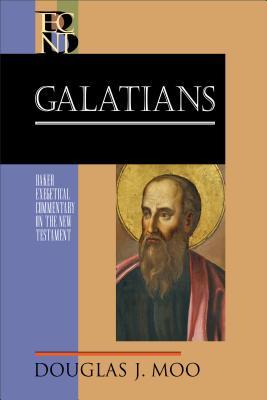
Douglas J. Moo, Galatians, Baker Exegetical Commentary on the New Testament:
With the final two words of the list, Paul returns to sins characteristic of the Gentile world of his day. “Drunkenness” (μέθαι, methai) may refer simply to inebriation, but as BDAG (625) notes, the proximity of this word with κῶμοι (kōmoi, orgies) both here and in Rom. 13:13 may suggest the more specific nuance of “drinking bout” (the plural has a singular sense). This last word (κῶμοι) originally referred to a festal procession in honor of a Greek god and then came to be used more broadly for a feast or banquet. In Biblical Greek, however, the word always has the negative sense of “excessive feasting,” always involving too much drinking and often sexual liberties. A text from 2 Maccabees describing the activities of Greeks who desecrated the Jerusalem temple gives a sense of the word: “For the temple was filled with debauchery and reveling [κώμων] by the Gentiles, who dallied with prostitutes and had intercourse with women within the sacred precincts, and besides brought in things for sacrifice that were unfit” (2 - (2 -Macc. 6:4; see also Wis. 14:23; Rom. 13:13; 1 Pet. 4:3). The plural form is again used, with “wild parties” (NLT) perhaps catching the idea fairly well (NIV and ESV “orgies” is too specifically sexual). Peter uses this word, along with two others that Paul lists in this context, to describe the pagan lifestyle characteristic of Gentiles before conversion: “For you have spent enough time in the past doing what pagans choose to do—living in debauchery [ἀσέλγεια], lust, drunkenness, orgies, carousing [κώμοις] and detestable idolatry [εἰδωλολατρίαις]” (1 Pet. 4:3).

Ronald Y.K. Fung (Galatians):
Kōmoi is variously rendered as “carousings” (NASB), “revellings” (AV) and “orgies” (NEB). Kōmos (singular) is a natural companion of “drunkenness” (cf. Rom. 13:13), a characteristic feature of the pagan way of life (1 Pet. 4:3), and a concrete example of putting “pleasure in the place of God” (so NEB, 2 Tim. 3:4, Gk. philēdonos). This catalog of vices is prefaced by hatina (“the kind of”) and followed by kai ta homoia (“and the like”) both of which show that the enumeration is representative and not exhaustive.⁹⁸ Many sins mentioned elsewhere in Paul’s letters⁹⁹ are missing from this list. Of the fifteen items mentioned, the first three and the last two (groups [a] and [d]) are sins committed in the sphere of the body, but the rest (groups [b] and [c]) “might well be committed by disembodied spirits,” thus showing that “the deeds of the flesh” are not necessarily physical or sensual, but embrace spiritual vices as well.


Saturday, March 30, 2019

Thomas R. Schreiner on φαρμακεία (Galatians 5:20)

Sorcery or magic (φαρμακεία) is regularly condemned in Jewish literature (Exod 7:11, 22; 8:14; Isa 47:9, 12; Rev 18:23; cf. Wis 12:4; 18:13), for instead of trusting in God, people try to manipulate circumstances to bring
about the end they desire. Sorcery, then, turns one from trust in the living God to dependence on other sources.

See Galatians in the Zondervan Exegetical Commentary Series on the New Testament.

Wednesday, March 27, 2019

2 Kings 2:1, 11 (LXX)--Screenshot

James Baikie and Bible Reading in the Middle Ages

James Baikie's work is entitled The English Bible and Its Story (London: Seeley, 1928). I tried to find out about his personal details and simply could not take the time to do a major search, but I trust he was not a friend of the RCC. However, he himself does write in the Preface of his monograph: "While the point of view from which the book is written is frankly Protestant, I have endeavored throughout to avoid a merely partisan presentation of the facts, and to give credit where it is due to men who, like Erasmus, found themselves unable to go all the way with the Reformers, as well as to the merits of such champions of the Roman Church as the translators of the Rheims and the Douai version."

He indicates that it's difficult to take the "There was no demand for a vernacular copy of Holy Writ during the middle ages" argument seriously. Baikie appears to think the claim does not hold water, and rightly so it seems, for history suggests that several men and women were clamoring to read God's Holy Word in the 1500s. But they were forbidden to read the Scriptures under pain of heresy. Owning a Bible resulted in the torture or death of not a few lay members--both men and women. Simply possessing a Bible likely was viewed as a crime by the Church. Catholic historian Paul Johnson relates the following account:

"Access to the Bible, whether in the original or in any other tongue, had never been an issue in the East. In the West, the clergy had begun to assert an exclusive interpretive, indeed custodial, right to the Bible as early as the ninth century; and from about 1080 there had been frequent instances of the Pope, councils and bishops forbidding not only vernacular translations but any reading at all, by laymen, of the Bible taken as a whole. In some ways this was the most scandalous aspect of the Medieval Latin Church. From the Waldensians onwards, attempts to scrutinize the Bible became proof presumptive of heresy--a man or a woman might burn for it alone--and, conversely, the heterodox were increasingly convinced that the Bible was incompatible with papal and clerical claims" (A History of Christianity 273).

Baikie also recounts the story of eight persons who were arrested in Leicester for reading the Bible (page 140). Three of them recanted of their "heresy" and were ordered to do penance; their names were Roger Dexter, William Smith and Alice (ibid.). They were charged with the "heinous crime of reading the Gospel in their own tongue" but were absolved after doing penance (ibid). Dexter, Smith and Alice desired to read the Bible in their own language but religious authorities thought otherwise.

The English Bible and Its Story provides evidence of other men and women who fervently desired to read the Bible, but they could not afford a copy or were not allowed to possess one. Hence, these individuals memorized Scripture despite the threat of death. Baikie lists Thomas Chase, who was charged with merely reciting the Epistle of James and Luke as well as Agnes Ashford, who taught Chase part of Jesus' Sermon on the Mount. Subsequently, the Church not only refused to let Ashford teach any man; she also was not permitted to teach her own children portions of Holy Writ (Baikie 144).

Saturday, March 23, 2019

1 Corinthians 1:9-10 and Style

Greek: πιστὸς ὁ θεός, δι’ οὗ ἐκλήθητε εἰς κοινωνίαν τοῦ υἱοῦ αὐτοῦ Ἰησοῦ Χριστοῦ τοῦ κυρίου ἡμῶν. Παρακαλῶ δὲ ὑμᾶς, ἀδελφοί, διὰ τοῦ ὀνόματος τοῦ κυρίου ἡμῶν Ἰησοῦ Χριστοῦ, ἵνα τὸ αὐτὸ λέγητε πάντες καὶ μὴ ᾖ ἐν ὑμῖν σχίσματα, ἦτε δὲ κατηρτισμένοι ἐν τῷ αὐτῷ νοῒ καὶ ἐν τῇ αὐτῇ γνώμῃ. (NA28)

Notice how the apostle writes here. At first, the syntax is Ἰησοῦ Χριστοῦ τοῦ κυρίου ἡμῶν, then τοῦ κυρίου ἡμῶν Ἰησοῦ Χριστοῦ in v. 10. What is the significance of this contrasting word order?

Firstly, let's review what Joseph Fitzmyer's Anchor Bible Commentary (p. 134) states regarding 1 Cor. 1:9:

through whom you have been called into companionship with his Son, Jesus Christ our Lord. The prep. dia denotes the source, not the mediation, of assurance that comes from God (BDR §223.3). Soards (1 Cor, 30), however, strangely understands di’ hou, “through whom,” to refer “to the Lord Jesus Christ through whom God acts in relation to humanity.” That might be a good Pauline idea, but that is not what the text says. The rel. pronoun in the prep. phrase di’ hou has God as its antecedent, and the relation to Christ is expressed by eis koinonian. Rather than di’ hou, mss D, F, G, read rather hyph’ hou, “by whom,” followed by the RSV.

I think Fitzmyer somewhat misunderstands Marion Soards' point. Quite frankly, he does not claim that "through whom" (δι’ οὗ) refers to Christ in 1 Cor. 1:19. His exact words are:

The NIV obscures both Paul’s pattern of speech and the essence of his thought. The loss of precision in language is unfortunate, for Paul’s statement contains the unusual idea that God is the agent through whom the Corinthians were called. In every other instance that Paul uses the phrase “through whom” (Gk. di’ hou), he is referring to the Lord Jesus Christ as the one through whom God acts in relation to humanity—cf. Rom. 1:5; 5:2, 11; 1 Cor. 8:6; Gal. 6:14 (this last reference is ambiguous and may mean “through which” in reference to the cross of the Lord Jesus Christ).

[END QUOTE]

So when read in context, it becomes clear that Soards is not asserting that "through whom" refers to Jesus in 1 Cor. 1:9. Rather, Soards is talking about other verses where such language is used.

The question still remains as to why Paul uses the syntax of vss. 9-10. It seems to me that the syntax is used for rhetorical effect and it illustrates different ways that Christ could be referenced by 1st century writers, namely, as "Jesus Christ our Lord" or "our Lord Jesus Christ."


Wednesday, March 20, 2019

2 Baruch 51:7-11 (Like unto angels and equal to stars)

But those who have been saved by their works and to whom the Torah has been now a hope and understanding an expec­tation and wisdom a confidence shall wonders appear in their time. 8 For they shall behold the world which is now invisible to them and they shall behold the time which is now hidden from them: 9 And time shall no longer age them. 10 For in the heights of that world shall they dwell and they shall be made like unto the angels and be made equal to the stars, And they shall be changed into every form they desire, from beauty into loveliness, and from light into the splendour of glory. 11 For there shall be spread before them the extents of Paradise, and there shall be shown to them the beauty of the majesty of the living creatures which are beneath the throne and all the armies of the angels who are now held fast by my word, lest they should appear, and are held fast by a command, that they may stand in their places till their advent comes.

https://www.cepher.net/2-baruch-51.aspx

Monday, March 18, 2019

Variant Kinds of Dualism (Kevin Corcoran)

Kevin Corcoran analyzes different kinds of dualism in his book, Rethinking Human Nature. Dualism here primarily refers to anthropological twoness: it is the claim that humans are composed of not one, but two things (e.g., body/soul or body/spirit).

Rene Descartes insists that a substance either has mental or physical properties (e.g., being in pain or having a certain mass/weight), but not both.

What kind of dualism is Descartes espousing? The technical name for his philosophy is substance dualism: he argues for two categories--res extensa (extended substance) and res cogitans (thinking substance). The French thinker asserts that he is the latter rather than the former; that is to say, Descartes is not absolutely identical with his body, but allegedly is identical with his soul (mind).

So Descartes allows for the possibility of disembodied existence as a thinking thing. Yet there are questions that can be asked concerning resurrection when it's understood within a dualist framework. For example, does substance dualism satisfactorily account for a resurrection of the body? Physicalist accounts of the resurrection are often heavily critiqued or discounted, but I wonder if dualism (especially of a Cartesian kind) fares any better.

How can the resurrection body be numerically identical with the body that preceded it, since at death, all bodies--with the exception of Christ's body--undergo corruption? That question is difficult to answer using Cartesianism, although hylomorphic/hylemorphic dualism thinks it can provide a plausible answer to the question. But I've seen hylemorphic/hylomorphic accounts that appeal to divine miracle-working in order to justify an absolute identity between the pre and post-resurrection body. Are such approaches satisfactory explanations of the resurrection?

Admittedly, the resurrection is a divine miracle, and so is life itself. Yet multiplying explanations to preserve numerical identity between living and resurrected bodies seems less than satisfactory.

I. Compound Dualism claims that humans are form and matter composites (otherwise known as hylomorphism). Matter (hyle) and form (morphe) constitute two metaphysical principles that define what things (including human beings) are. Aristotle taught hylomorphism: he argues that material objects are matter and form unities. Some examples include tree and treeness or rock and rockness. In the case of human beings, the body is matter, the soul is the substantial form of the body; soul is that which gives the organized material body its distinct form.

Thomas Aquinas rejects substance dualism since he does not believe that the body and soul are two independent substances which possess the capability to subsist on their own. Although he believes the soul can survive the body's death, the soul post mortem is not an actual human being although Aquinas believes that the soul is a subsistent thing. Yet see page 37.

Corcoran apparently reckons that compound dualism is incoherent. But why?

See p. 39

Compound dualists believe that the post mortem soul is able to contemplate God and subsist temporarily without a body.

II. Emergent Dualism

William Hasker represents emergent dualism--he illustrates this kind of dualism with an electro-magnetic field and its source. Minds emerge from complex biological systems with examples including solidity and molecular structure. Mentality supposedly emerges from a suitably complex physical system.

Hasker claims that mentality or mind is not reducible to neural firings or brain events. Mind is allegedly a new phenomenon that emerges from a physical system. So Hasker posits that it's capable of exerting force on that from which it emerges.

See p. 41.


For potential advantages of emergent dualism, see p. 42.

Sunday, March 17, 2019

Colossians 3:23--Some Observations

I. Greek: ὃ ἐὰν ποιῆτε, ἐκ ψυχῆς ἐργάζεσθε, ὡς τῷ κυρίῳ καὶ οὐκ ἀνθρώποις (Colossians 3:23)

II. Translations: "Whatever you do, work heartily, as for the Lord and not for men" (ESV)

"Whatever you do, do your work heartily, as for the Lord rather than for men" (NASB)

"Whatever you are doing, work at it whole-souled as for Jehovah, and not for men" (NWT 2013)

II. To Whom These Words Were Addressed:

See Colossians 3:22: οἱ δοῦλοι, ὑπακούετε κατὰ πάντα τοῖς κατὰ σάρκα κυρίοις, μὴ ἐν ὀφθαλμοδουλίαις, ὡς ἀνθρωπάρεσκοι, ἀλλ’ ἐν ἁπλότητι καρδίας, φοβούμενοι τὸν κύριον. (SBLGNT)

III. Potential Literary Background:

It's difficult to say what motivated the counsel found at Colossians 3:23, but F.F. Bruce (The Epistles to the Colossians, to Philemon, and to the Ephesians) makes this suggestion:

Christian slaves are next addressed. Within the context of a household code household slaves are primarily in view, and slaves in a Christian household at that. But the directions given would be applicable to slaves whose duties were not within the household (slaves employed in agriculture or industry, for example), and to slaves of pagan masters. Both in this letter and in Ephesians the injunctions to slaves are more extended than those to masters, and are accompanied by special encouragement. This, it has been suggested, is “a reflection of the social structure of these churches”¹⁹⁹ (the implication being that they contained more slaves than masters). That may well be so. On the other hand, it has been pointed out that “the content of the admonitions would certainly be more readily approved by owners than by slaves.”²⁰⁰


IV.Observations:

John Eadie:

In this verse the common reading is καὶ πᾶν ὅ, τι ἐὰν ποιῆτε, but the better reading is ὃ ἐὰν ποιῆτε, ἐκ ψυχῆς ἐργάζεσθε, ὡς τῷ κυρίῳ καὶ οὐκ ἀνθρώποις—“Whatever ye are in the way of doing, work it heartily as to the Lord, and not to men.” They were, in any task that might be assigned them, to labour at it, to work it out, and that without grumbling or reluctance, not only doing it honestly but cheerfully, as Chrysostom says- μὴ μετὰ δουλικῆς ἀνάγκης. [Ephesians 6:6.] The heathen slave might do everything with a grudge, for he had no interest in his labour, but the believing slave was to act with cordiality, plying his toil with alacrity, for he was serving in all this industry no human master, but the Lord, who had bought him with His precious blood. Let this be the feeling, and there would be no temptation to fall into eye-service, men-pleasing, and duplicity of heart or conduct. The apostle says without reservation—“as to the Lord, and not to men.” There is no necessity to take οὐκ as meaning οὐ μόνον. The immediate object of the service must be man, but the ultimate object is the Lord; the negative, though absolute in form, being relative in sense. Winer, § 55, 1. The service, whatever its nature, or its relation to man, was ever to be felt and viewed as an act of obedience done to Christ. See under Colossians 3:17. In doing it to others, they did it to Him; and to Him, with such claims upon their love and fealty, they could not but give suit and service heartily. As usual, in the parallel place in Ephesians, the thought is given more fully, and the relationship of the slave's labour to Christ is twice noted. Besides, not only was the servant to work as here- ἐκ ψυχῆς—“from the heart,” pointing out his relation to his work, but he is enjoined also to labour- μετ᾿ εὐνοίας-that is, “with good will” to his master.

On the other hand, James Dunn thinks Colossians 3:23 likely echoes Deuteronomy 6:5: compare Mark 12:30. Note how NEB and NJB translate this passage. Dunn writes (The Epistles to the Colossians and to Philemon, pages 255-56):

The motivation will be strengthened by doing the "whatever" for the Lord (Christ), even when it is also to be done for human masters. If there is indeed an echo of Deut. 6:5, we should note again how easily the Christian writer thinks of the Lord to be loved from the whole ψυχή as Christ (see also on 3:22). Here, too, the thematic statement (2:6-7) continues to exert its influence.

Of course, those familiar with the NWT will know that "Jehovah" appears in Col. 3:23 rather than "Lord."

Saturday, March 16, 2019

August H. Konkel's Remarks About 1 Kings 8:63

The sacrifices previously described as being without number (v. 5) are here enumerated in terms of oxen and sheep (v. 63). Communal peace offerings introduce the sacrifices and appear to be the central aspect of the dedication. The main function of these offerings is to provide food for the table; these sacrifices are for joyous occasions of celebration.²¹ Worshipers and priests share the peace offerings, providing a bonding of the community and a cele- bration of the covenant (Lev. 7:11–15, 30–36). The blood, fat, and entrails of the peace offering are devoted to God (3:3–5). The quantity of these offerings, plus the burnt offerings and grain offerings given to God, is so great that the great bronze altar does not have sufficient capacity (1 Kings 8:64). The entire court was consecrated for the occasion. Sacrifices were an essential part of the ritual in ancient temple dedications. The central event was the divine possession of the temple (cf. vv. 11–12), which was necessarily accompanied with great celebration and sacrifices for the occasion. The significance of the temple dedication is expressed in the anguage of its own culture. Hurowitz is able to cite numerous parallel examples from Mesopotamian literature.²² Esarhaddon dedicated the Assur temple by placing the god in his eternal dais and offered countless sacrifices. His dignitaries and the people celebrated for three days in the temple courtyard.

Quoted from August H. Konkel, 1 & 2 KINGS: THE NIV APPLICATION COMMENTARY.

See Victor Hurowitz, I Have Built You an Exalted House, 273–77.

Friday, March 15, 2019

Some Thoughts Concerning 2 Kings 4:39

Regarding 2 Kings 4:39, it seems to me that the "wild gourds" were naturally poisonous, not baneful because of a curse.

NLT: One of the young men went out into the field to gather herbs and came back with a pocketful of wild gourds. He shredded them and put them into the pot without realizing they were poisonous. (2 Kings 4:39)

NET translates the last part of 2 Kings 4:39, "not knowing they were harmful."

The NET Bible adds this note: tc The Hebrew text reads, “for they did not know” (יָדָעוּ, yada’u) but some emend the final shureq (וּ, indicating a third plural subject) to holem vav (וֹ, a third masculine singular pronominal suffix on a third singular verb) and read “for he did not know it.” Perhaps it is best to omit the final vav as dittographic (note the vav at the beginning of the next verb form) and read simply, “for he did not know.” See M. Cogan and H. Tadmor, II Kings (AB),

John Lange offers these comments on 2 Kings 4:39. I will not post what he writes about 2 Kings 4:40, but you might find those comments instructive as well if you choose to read them:

The פַּקֻּעֹת שָׂדֶה are wild cucumbers or gourds (cucumeres agrestes, or, asinini), also called bursting-cucumbers. They have the form of an egg, and a bitter taste. When they are ripe they burst in pieces if pressed on the stem, whence their name (פקע fidit, rupit). When eaten they cause colic and violent purging. The young man took these wild gourds for ordinary ones, which were very much prized as food (Num. 11:5). The Sept. and Vulg. translate by colocynth. Keil also prefers this, because this fruit does not burst when touched, and so could be easily carried home in the garment and cut up; but the root פקע is too distinctly in favor of the bursting-gourd, which did not burst in this instance simply because the specimens collected were not entirely ripe (cf. Winer, R.-W.-B., i. s. 441 sq.). However, the cucumis colocynthi L., or the poisonous colocynth, also has a remarkably bitter taste—a vine which creeps upon the earth, and has light green leaves (cf. I. c., s. 427).

On the other hand, Iain W. Provan writes:

We do not know whether the mixture is really deadly in a literal sense—that is only what the men who have tasted it say. What is indisputable is that Elisha knows, in his wisdom, what to add to the pot to make everything all right—even though no one else knows what the cook originally put in (v. 39). He has remarkable insight, even into the various properties of plants. It is this that makes him a better cook than his servant—as he was a greater healer in 4:8–37.

See Provan, 1 and 2 Kings.

Expositor's Bible Commentary (Old Testament):

This chapter closes with two incidents relative to Elisha's miraculous help in food matters in the prophetic school at Gilgal. In the first instance, a student who had been sent to gather wild vegetables brought an unknown type to them and cut the gatherings into the stew. Its bitter taste convinced the diners that the stew was poisoned; so immediately they cried out to Elisha. He called for flour to be brought; and when he had stirred it into the pot, the stew was found to be both tasteful and safe. Elisha's faith effected a miraculous cure. As had been the case with Elijah his teacher, Elisha had used flour to demonstrate the concern of God for one's daily provisions (cf. 1Ki 17:14-16).

Tuesday, March 12, 2019

1 Thessalonians 4:13-18 and the Rapture

(1) First, let me say that Jehovah's Witnesses believe there are two hopes or eternal destinies for the righteous: some of the righteous will live forever on earth, while others (the 144,000) will reign immortally in heaven. It is my belief that 1 Thess. 4:13-18 refers to those who will dwell in the heavens of God's presence for all eternity.

(2) I understand the Rapture to be an event in which God removes His church from earth to heaven bodily apart from the experience of physical death. Thus, while I certainly profess that certain Christians (i.e., the 144,000) will be snatched up to meet the Lord Jesus Christ in the air, I do not agree that this seizing will be "bodily" (that is, the physical body will not be taken upward); nor does it appear that those taken up to meet Christ will bypass physical death.

(3) 1 Thess. 4:13-18 has reference to the resurrection which occurs during the parousia of Christ. That is why Paul exhorts the Thessalonians to comfort one another with the words found chapter four of that letter. Finally, 1 Cor. 15:35ff indicates that Christians who will reside in heaven forever must undergo the experience of physical death: Jehovah God imparts the heavenly inheritance to certain humans via spiritual resurrection.

Someone asked about those members of the 144,000 who are living when God executes judgment upon this evil age (Gal. 1:4; 2 Thess. 1:6-9). Will they too have to undergo the experience of physical death. It is not wise to be dogmatic here, but the biblical account of Enoch may suggest that God Jehovah will shorten the lives of the 144,000 who are living when Christ reveals himself in all his glory.

Wednesday, March 06, 2019

Revelation 20:4 (Beheading?)

Revelation 20:4 (ESV): "Then I saw thrones, and seated on them were those to whom the authority to judge was committed. Also I saw the souls of those who had been beheaded for the testimony of Jesus and for the word of God, and those who had not worshiped the beast or its image and had not received its mark on their foreheads or their hands. They came to life and reigned with Christ for a thousand years."

SBLGNT: Καὶ εἶδον θρόνους, καὶ ἐκάθισαν ἐπ’ αὐτούς, καὶ κρίμα ἐδόθη αὐτοῖς, καὶ τὰς ψυχὰς τῶν πεπελεκισμένων διὰ τὴν μαρτυρίαν Ἰησοῦ καὶ διὰ τὸν λόγον τοῦ θεοῦ, καὶ οἵτινες οὐ προσεκύνησαν τὸ θηρίον οὐδὲ τὴν εἰκόνα αὐτοῦ καὶ οὐκ ἔλαβον τὸ χάραγμα ἐπὶ τὸ μέτωπον καὶ ἐπὶ τὴν χεῖρα αὐτῶν· καὶ ἔζησαν καὶ ἐβασίλευσαν μετὰ τοῦ χριστοῦ [a]χίλια ἔτη.

Commentary: "The martyrs in chapter 6 were said to be 'slain' or 'slaughtered.' Here they have been beheaded. They are actual martyrs because in John's visions all faithful Christians have been killed. They are not an elite group that is more 'spiritual' than other believers. The further description of them as those who had not worshiped the beast or his image and had not received his mark on their foreheads or their hands (v. 4) places the accent not on their martyrdom as such but on the faithfulness that made martyrdom inevitable."

See https://www.biblegateway.com/resources/commentaries/IVP-NT/Rev/Reign-Martyrs

Albert Barnes: "That were beheaded - The word used here - πελεκίζω pelekizō- occurs nowhere else in the New Testament. It properly means, 'to axe,' that is, to hew or cut with an axe - from πέλεκυς pelekus 'axe.' Hence it means to behead with an axe. This was a common mode of execution among the Romans, and doubtless many of the Christian martyrs suffered in this manner; but 'it cannot be supposed to have been the intention of the writer to confine the rewards of martyrs to those who suffered in this particular way; for this specific and ignominious method of punishment is designated merely as the symbol of any and every kind of martyrdom'” (Prof. Stuart)."

Sunday, March 03, 2019

Logical Possibility, Scripture, and the Virgin Birth

The expression "logical possibility" means that a statement (P) is not self-contradictory such that P and ~P.

It is logically possible (not self-contradictory) that a man could have experienced physical birth through a virgin, which occurred by means of the holy spirit. But would such a man still have been perfect (in the relevant sense) and thus qualified to ransom his life for humanity?

One older Witness publication argued that only the Word/Logos (the preeminent Son of God and first creation) was qualified to ransom humanity and meet Satan's challenge against Jehovah's divine sovereignty. The more I think about perfect humans coming from imperfect ones, it seems complex since Job effectively said clean beings do not emanate from unclean ones (Job 14:4). Psalm 49:7-8 indicates that humans could never provide a heavenly deliverer: the savior had to come from on high. All the "sent" passages in John might also suggest that God provided a divine being in human form to save us and sanctify his name. See Hebrews 10:5-6. At the end of the day, I not only reckon that the virgin birth is logically possible, but I place my faith in God's wondrous miracle.

Friday, March 01, 2019

Douglas J. Moo, Hoti, and Galatians 4:6

Greek: ὅτι δέ ἐστε υἱοί, ἐξαπέστειλεν ὁ θεὸς τὸ πνεῦμα τοῦ υἱοῦ αὐτοῦ εἰς τὰς καρδίας ἡμῶν, κρᾶζον· Αββα ὁ πατήρ. (SBLGNT)

There is some debate about whether ὅτι in Galatians 4:6 is demonstrative or causal.

NWT: Now because you are sons, God has sent the spirit of his Son into our hearts, and it cries out: “Abba, Father!”

HCSB: And because you are sons, God has sent the Spirit of His Son into our hearts, crying, “Abba, Father!”

CEV: Now that we are his children, God has sent the Spirit of his Son into our hearts. And his Spirit tells us that God is our Father.

ESV: And because you are sons, God has sent the Spirit of his Son into our hearts, crying, “Abba! Father!”

Tyndale Bible: Be cause ye are sonnes God hath sent the sprete of his sonne in to oure hertes which cryeth Abba father.

While it seems that ὅτι is definitely causal in this case, Douglas J. Moo writes the following (Galatians, Baker Exegetical Series):

The initial ὅτι (hoti, because) is most naturally taken in a causal sense, and this also fits the sequence of Paul’s argument: we have received the adoption as sons, and because we are now sons, we also have the Spirit. The only problem with this interpretation is that the claim that possession of the Spirit proceeds from the status of sonship appears to contradict Paul’s usual sequence, which is just the opposite. Especially important is Rom. 8:14–17, a passage with many obvious similarities to Gal. 4:4–6

Moo quotes the verses in Romans, then he professes:

Further, earlier in Galatians Paul has assumed that the Spirit marks the beginning of Christian experience (3:3). For these reasons, some interpreters suggest that this initial ὅτι might have a “declarative” function and depend on an implied assertion such as “to prove that”; see NAB: “As proof that you are children, God sent the spirit of his Son into our hearts, crying out, ‘Abba, Father!’” (see also Lietzmann 1932: 25; Dunn 1993a: 219; Moule 1959: 147; Rohde 1989: 173). However, this is not the obvious way to understand ὅτι, and it is doubtful if we need to introduce such a reading in order to preserve Pauline consistency. A careful reading of Rom. 8:14–17 shows that Paul is not clearly arguing for a sequence of Spirit—sonship. Having the Spirit means that one is a “son”; but Paul is not clearly saying that the Spirit confers sonship. Nor does Paul’s claim that the Spirit marks the “beginning” of Christian experience (3:3) mean that the Spirit must be absolutely prior to all other Christian blessings. Paul wants to associate the status of sonship with the gift of the Spirit, but claiming that Paul teaches a strict temporal or logical sequence between them would be overreading this text and others (see, e.g., R. Longenecker 1990: 173; Martyn 1997: 391; Schreiner 2010: 272).[18] The “sequence” of sonship and Spirit in various texts in Paul is thus probably dictated more by rhetorical than theological concerns.

In addition to the commentators that Moo invokes, see John Eadie's extended comments on Galatians 4:6.


Wednesday, February 27, 2019

Some of My Favorite Theology Books

https://www.amazon.com/ideas/amzn1.account.AEPCG3HGI5LDNR2LI6UHVGBP44JQ/3LKN7S1DAZWRC

Sunday, February 24, 2019

Jerome's Commentary With Respect to Daniel 3:25

"And they said to the king in reply, 'Truly, O king!' The king answered (the Vulgate omits "the king"): 'Behold, I see four men unbound and walking about in the midst of the fire, and they have no hurt, and the appearance of the fourth man (B) is the likeness of a son of God.' " Let me say again, how wise was the fire and how indescribable the power of God! Their bodies had been bound with chains; those chains were burnt up, whereas the bodies themselves were not burnt. As for the appearance of the fourth man, which he asserts to be like that of a son of God, either we must take him to be an angel, as the Septuagint has rendered it, or indeed, as the majority think, the Lord our Savior. Yet I do not know how an ungodly king could have merited a vision of the Son of God. On that |44 reasoning one should follow Symmachus, who has thus interpreted it: "But the appearance of the fourth is like unto the sons," not unto the sons of God but unto gods themselves. We are to think of angels here, who after all are very frequently called gods as well as sons of God. So much for the story itself. But as for its typical significance, this angel or son of God foreshadows our Lord Jesus (p. 512) Christ, who descended into the furnace of hell, in which the souls of both sinners and of the righteous were imprisoned, in order that He might without suffering any scorching by fire or injury to His person deliver those who were held imprisoned by chains of death.

See http://www.tertullian.org/fathers/jerome_daniel_02_text.htm

Saturday, February 23, 2019

God Recommends His Own Love (Romans 5:8)

The supreme manifestation of Jehovah's love is Jesus Christ's ransom sacrifice: that ransom provides the basis for Jehovah's vindication and is our sole way to obtain everlasting life (Romans 6:23). Notice what we learn about God's love and our need for the ransom from Romans 5:8, 12:

After reading the verses:

Comment on Rom. 5:8: God sent Christ while we were yet sinners. What an expression of divine love since the Son of God did not die for righteous or good people, but in behalf of sinners.

Romans 5:12 stresses our need for the ransom that Jehovah lovingly provided through Christ: "Through one man sin entered into the world and death through sin, and thus death spread to all men because they had all sinned."

Jehovah made Adam and Eve perfect, but they used their free will to disobey him. The first couple was given just one limiting and reasonable directive: don't eat from the tree that's in the middle of the garden. Nevertheless, they ignored Jehovah and consequently repudiated his sovereignty. Yet how did Adam and Eve's disobedience affect us?

To address that question, please consider Romans 5:13, 14:

After reading the verses:

By virtue of Adam's disobedience, sin ruled as king from Adam down to Moses even prior to the Mosaic law code. However, once Jehovah gave the law to Israel, then sin became manifest because the law code plainly defined sin: it clearly demonstrated that we are sinners and need a redeemer. As Paul wrote in Romans 7:7, I would not have known how to identify sin or covetousness if it had not been for the law of Moses.

To illustrate sin's effect on us, we might compare it to an illness or disease. Nevertheless, while diseases like hemophilia can be transmitted from parents to their children, it is still possible for a child to carry hemophilia genetically without actually having the disease. But that is not the case with sin. If a parent is sinful, then children will be tainted with sin too. Therefore, how can we escape this predicament?

Romans 5:18, 21 explains the way:

What does the expression, "their being declared righteous for life" mean? One scholar writes that when God declares someone righteous, he doesn't cleanse the person inwardly, but rather Jehovah acquits the accused person standing before him. Yes, our situation is comparable to an accused person, who appears before a human judge to receive a sentence of innocent or guilty. We can be thankful that Jehovah lovingly acquits those who exercise faith in the ransom; he declares them guiltless. The result of being declared righteous is "everlasting life through Jesus Christ our Lord" (Romans 5:21).

As we reflect on God's love for us even while we were sinners, the question naturally arises as to how we can show appreciation for the ransom. Two concrete ways are dedication and baptism along with preaching the good news of God's kingdom. It is also good to ask ourselves in what other ways we might show gratitude to Jehovah for Jesus' ransom sacrifice, for it is by means of the ransom that God especially recommends his love to us.


Wednesday, February 20, 2019

Monday, February 18, 2019

Bruce Metzger's and Revelation 13:18 (666/616)--Screenshots

Margaret Barker Comments About Revelation 13:18 (666/616)

Taken from Barker's Revelation of Jesus Christ, pages 233-235. My posting these remarks do not constitute an endorsement of Margaret Barker's position:

Most references to the beast refer only to his mark (14.9; 16.2; 19.20, 20.4), but the introduction of his 'number' is another device to indicate Nero. The name of the beast and 666, the number of its name (13.17), refer to the way that letters were also used as numbers; the first letter of the Hebrew alphabet was used for 1, the third for 3 and so on. Treated thus, a process known as gematria, the Greek name 'Neron Caesar', spelled in Hebrew letters, becomes N (50) + R (200) + W (6) + N (50) + Q (100) + S (60) + R (200), making 666. This spelling of the name is confirmed by an Aramaic document found at Murabba'at, dated 'the second year of the Emperor Nero'. This implies an interpretation of the name by people who understood Hebrew or Aramaic, even though Revelation is now written in Greek. The identification of the beast as Nero has been a commonplace among scholars since it was first suggested a century ago, long before the Murabba'at document confirmed the contemporary spelling of the name Nero. The problem is that this form of gematria is only known elsewhere using Greek letters, not Hebrew. At the end of the second century CE, however, there were some versions of Revelation which had the number of the beast as 616, a further challenge to scholars' ingenuity (Irenaeus, AH 5.30). It could represent the Latin form 'Nero Caesar', the final 'N' of the Greek form being dropped and thus the gematria number being reduced by 50 to 616. Or it could be conventional gematria with the Greek letters of the name 'Gaios Kaisar', and the beast could be Caligula. By the time of Irenaeus, the end of the second century CE, the identification of the beast as Nero was not known (AH 5.28-30), but the fear of Nero had passed into Christian tradition, and there can be no doubt that Nero's evil reign was written into the final interpretation of the beast in the Book of Revelation. The Ascension of Isaiah, whose Christian version was completed towards the end of the first century CE, 'foresees' the reign of Nero:

Beliar will descend, the great angel, the king of this world ... He will descend from his firmament in the form of a man, a king of iniquity,* the murderer of his mother** and he will persecute the plant which the twelve apostles of the Beloved have planted ... By his word he will cause the sun to rise by night, and the moon also he will make to appear at the sixth hour. And he will do everything he wishes in the world; he will act and speak like the Beloved and he will say, 'I am the LORD and before me there was no one' ... And all men in the world will believe in him. They will sacrifice to him and will serve him saying, 'This is the LORD and besides him there is no other' ... And the power of his miracles will be in every city and district and he will set up his image before him in every city. (Asc. Isa. 4.1-12)

The beast, however, had taken many forms before it was identified as Nero. The evil reign of Antiochus Epiphanes (175-163 BCE) was also a time of the beast, as can be seen from Daniel 7.19-27 which explained that the time of the fourth and last beast had come. When a false rumour arose that Antiochus was dead, civil strife broke out in Judea and Antiochus returned to quell the trouble in Jerusalem (2 Macc. 5). A great slaughter followed, with 40,000 killed and a similar number sold as slaves. He robbed the temple and defiled the sanctuary by entering it and then setting up a pagan altar. Many Jews adopted his pagan ways and sacrificed to idols (1 Macc. 1). The Book of Daniel addressed this situation and interpreted the ancient vision of the Man ascending to heaven as a sign of hope for those troubled times (Dan. 7). There would be an abomination set in the temple, but the saints would triumph. Much of what is said about the beast in Revelation could have been said of Antiochus. Had these fragments of Revelation been discovered for the first time, abandoned in a cave, it would have been easy for scholars to argue for a date in the second century BCE. The beast had the blasphemous name 'Epiphanes', which means 'The Manifest God'; there had been a rumour of his death but he returned to wreak havoc in Jerusalem just as the beast returned 'from the bottomless pit' to wreak havoc in Jerusalem (11.7-8); he blasphemed God's Name and his dwelling, the temple (13.6), and he both took captives and slew with the sword (13.10)

There is more, but see Barker.

Monday, February 11, 2019

In What Sense Did God Possibly Create Darkness? (Isaiah 45:7)

Here are suggestions for reading:

https://www.jstor.org/stable/44092130?seq=1#page_scan_tab_contents

Information for this article: "THE CREATION OF DARKNESS AND EVIL (ISAIAH 45:6C-7)"
Tina Dykesteen Nilsen
Revue Biblique (1946-)
Vol. 115, No. 1 (JANVIER 2008), pp. 5-25.


Furthermore, see http://christianthinktank.com/iamwrong1.html

Note the comments made here: https://bible.org/seriespage/13-knowledge-lord-isaiah-4424-4525


Saturday, February 09, 2019

Stephen B. Miller's Remarks About Daniel 3:25

What impressed Nebuchadnezzar most of all was that now the three Jews had been joined by a fourth man, and this one looked like “a son of the gods.” Porteous69 and the majority of Jewish scholars have identified this person as an angel. For example, Slotki remarks, “The Talmud asserts that it was the archangel Gabriel (Pes. 118a, b).”70 According to Lacocque, “The expression is used in the inscriptions at Karatepe and Ugarit where it designates the members of the divine court.”71 However, the expression “a son of the gods” ascribes deity to the being, since an offspring of the gods partakes of the divine nature. Young remarks: “The meaning is son of deity, i.e., a Divine Person, one of the race of the gods, a supernatural being.”72 The NRSV's “the appearance of a god” seems to capture the idea well, for the king believed that he had seen no less than a god in the flames with the three Hebrews. The KJV renders this phrase “the Son of God,” an apparent allusion to the second person of the Trinity. Either the NIV or KJV translation is possible grammatically. In biblical Aramaic the plural noun ’ĕlāhîn may be assumed to have the same force as ’ĕlōhîm in biblical Hebrew, which can be rendered as a plural, “gods,” or as a singular, “God,” when denoting the true God, the plural form being an attempt to express the divine fullness and majesty.73 In this context, however, the translation of the NIV and most modern versions is to be preferred, since Nebuchadnezzar was polytheistic and had no conception of the Christian Trinity. Thus the pagan king only meant that the fourth figure in the fire was divine. From the Christian perspective, we know that the preincarnate Christ did appear to individuals in the Old Testament. Most likely the fourth man in the fire was the angel of the Lord, God himself in the person of his Son Jesus Christ, a view held by many expositors (cf. comments on 6: 21–22).74 It is certainly true that when believers go through fiery trials Christ is with them. The three Hebrews experienced literally the promise, “When you walk through the fire, you will not be burned; the flames will not set you ablaze”(Isa 43:2).

Miller, Stephen B. Daniel: An Exegetical and Theological Exposition of Holy Scripture: 18 (The New American Commentary) (Kindle Locations 2197-2218). B&H Publishing Group. Kindle Edition.

Friday, February 08, 2019

Daniel 3:25: "a Son of God"

Daniel 3:25 (ESV) reads: He answered and said, "But I see four men unbound, walking in the midst of the fire, and they are not hurt; and the appearance of the fourth is like a son of the gods."

Bob Utley offers these remarks:
"the fourth is like a son of the gods" A considerable amount of speculation has been made about this fourth personage. He is an angel of the Lord (cf. Dan. 3:28 also 6:22). It is humorous to note that when Nebuchadnezzar calls the boys out by name, he makes no mention of that fourth person!

The Anchor Bible Commentary, Daniel 1-9 (by L. F. Hartman and A.A. Di Lella) says for Daniel 3:25: "a divine being. Literally, ―a son of God,‖ rightly understood in vs. 28 as an angel; cf. also vs. 26."

Sunday, February 03, 2019

PANTA in Philippians 3:8 and 1 John 2:20

Moisés Silva argues that panta has a relative sense in Philippians 3:8. After all, the context indicates that this Greek adjective is delimited since the "all things" Paul references are objects that he considers to be "refuse" (skybala) or objects that he viewed as loss (ezemiothen). It is clear that Paul is not saying he deemed "all things" in the cosmos to be skybala. One would be doing violence to 3:8 by construing the author's words that way. Rather, panta is not being used in an absolute sense at Philippians 3:8, yet there are other New Testament constructions that make the same point.

Besides 1 John 2:27, we encounter an interesting variant for 1 John 2:20 that appears in the KJV: "But ye have an unction from the Holy One, and ye know all things." Concerning this epistolary verse, Ralph Earle (Word Meanings in the NT) states:

"If the reading of the bulk of later manuscripts is correct, 'all things' would have to be taken as meaning all things necessary to salvation (v. 27). But it is probably better to accept pantes [rather than the neuter pural accusative panta] as original--'you all know.'"

Earle agrees that neither the variant of 1 John 2:20 nor 1 John 2:27 imply that the holy ones know "all things" or are taught concerning "all things" in an absolute sense. Why, then, should we hastily conclude that the apostles meant Jesus was omniscient simply because they attributed "great knowledge" to him in John 16:30? Compare Proverbs 28:5.

Sunday, January 27, 2019

Brief Note on Pronunciation of Scriptural Terms (Somewhat Lighthearted)

"If you don't know how to pronounce a word, say it loud!" (William Strunk, Jr.)

Read more at: https://www.brainyquote.com/topics/pronounce

Those of us engaged in lots of public reading can sometimes either wonder how a certain biblical term is pronounced or we might insist that our way of saying a word is the only right way. I've also spoke with some friends who insist that words should be pronounced like they're read on the WT publications. But while I'm not denigrating the efforts that Witnesses have made to bring us numerous sources and Bible aids, I would humbly submit that pronunciation dogma is not a good thing.

Sure, we want to pronounce words correctly and to the best of our ability. However, there is usually more than one acceptable way to pronounce biblical terms. This post is meant to be lighthearted but educational. So I will conclude with some examples. How do you say Nisan, Jehoshaphat, Sanhedrin, Logos or Salome?

I've checked all of these words and you might have fun checking on their pronunciation as well.

I say "vahy-tuh-min," but you say "vit-uh-min." 😊

Wednesday, January 23, 2019

John E. Hartley Commentary on Job 38:7

From the New International Commentary on the Old Testament:

In various Near Eastern religions the morning stars were venerated as gods and goddesses. Many of them had an important role in the pantheon, esp. Venus. In this reference they are identifed among the sons of God, or angels, who were created by God for special service. In Gen. 1 the stars were created on the fourth day, but here they existed at the initial stages of creation. This apparent discrepancy indicates that “the morning stars” in this context is primarily a term that forms a synonymous parallelism with “the sons of God,” who, it is assumed, existed prior to the creation of the earth. It is, therefore, used metaphorically to refer to these heavenly creatures independent of the existence of the physical stars.

Monday, January 21, 2019

Romans 13:1-2 and the "Instituted" Authorities

Greek: Πᾶσα ψυχὴ ἐξουσίαις ὑπερεχούσαις ὑποτασσέσθω, οὐ γὰρ ἔστιν ἐξουσία εἰ μὴ ὑπὸ θεοῦ, αἱ δὲ οὖσαι ὑπὸ θεοῦ τεταγμέναι εἰσίν. 2 ὥστε ὁ ἀντιτασσόμενος τῇ ἐξουσίᾳ τῇ τοῦ θεοῦ διαταγῇ ἀνθέστηκεν, οἱ δὲ ἀνθεστηκότες ἑαυτοῖς κρίμα λήμψονται. (Romans 13:1-2 SBLGNT)

ESV: "Let every person be subject to the governing authorities. For there is no authority except from God, and those that exist have been instituted by God. 2 Therefore whoever resists the authorities resists what God has appointed, and those who resist will incur judgment."

NWT 2013: "Let every person be in subjection to the superior authorities,a for there is no authority except by God;b the existing authorities stand placed in their relative positions by God. Therefore, whoever opposes the authority has taken a stand against the arrangement of God; those who have taken a stand against it will bring judgment against themselves."

In what sense have the "governing authorities" been instituted or placed in their "relative positions by God"? Does Jehovah directly appoint every king on earth and directly remove every king? See Daniel 2:21.

We know from specific biblical examples that Jehovah has directly placed some rulers in their positions and he has deposed some. However, is Paul saying that's always the case?

One objection I've had to reading the text this way is that it's hard to see how God placed rulers like Nero or the biblical Pharaoh of Egypt in their relative positions. These men were wicked and even persecuted God's people or blasphemed the name of Jehovah. How could he have placed such men in their relative position? Yet God permits wickedness and also uses the wicked to accomplish his purpose.

Ralph Earle adds this observation about Romans 13:1: "Here the primary emphasis is on the authority of governments to rule. It should not be inferred from this passage that all rulers are chosen by God, but rather that all rule is divinely ordained. Goverments are set to enforce law. Since most people will not be ruled by love, they must be ruled by law. That is inevitable in an imperfect world" (Earle 204).


Friday, January 18, 2019

1 Samuel 15:33: What did Samuel Do to Agag?

After King Saul failed to slay the Amalekites, Samuel the prophet expressed Jehovah's displeasure for Saul's actions. Then 1 Samuel 15:33 states:

And Samuel said, “As your sword has made women childless, so shall your mother be childless among women.” And Samuel hacked Agag to pieces before the Lord in Gilgal. (ESV)

Samuel declared:

As your sword has made women childless, so your mother will be childless among women.

Then he hacked Agag to pieces before the Lord at Gilgal. (HCSB)

However, Samuel said: “Just as your sword has bereaved women of children, so your mother will be most bereaved among women.” With that Samuel hacked Aʹgag to pieces before Jehovah at Gilʹgal. (NWT 2013)

Robert Alter translates part of 1 Samuel 15:33 this way: "And Samuel cut him apart before the LORD at Gilgal." He then offers these remarks:

Samuel cut him apart before the LORD. "There is a long-standing consensus that the unique verb used here means something to this effect. The ghastly idea seems to be a kind of ritual butchering."

See The David Story, page 93.

A. Graeme Auld gives these comments (I and II Samuel: A Commentary, Page 175):

"33a. How precisely Samuel dispatches Agag is unclear: this is the unique instance of šsp (mt) in hb. The traditional 'dismember' presupposes a link with the later biblical šṣp. The gt’s choice of esphaxen may have been influenced by two sibilants followed by p in the unfamiliar Hebrew."


On page 180, Auld writes: "The slaying of Agag has features of both execution and sacrifice. Samuel’s judgment that the punishment will fit the crime suggests criminal process. and yet what happens is not simply 'at Gilgal' but 'before Yahweh' or 'in Yahweh’s presence' (in this respect, his death anticipates the death of seven of Saul's family in 2 Sam 21:9). There are regular elements of due order, or ritual, in judicial executions; but given the opaqueness of the unique verb šsp, it is unwise to say more."

From David Tsumura's 1 Samuel Commentary:

And Samuel hewed Agag to pieces: McCarter thinks that the LXX translation and the fact that it was done “before the Lord” suggest “sacrificial butchering.” He suggests that “cutting” in covenant ceremonies symbolized the punishment of covenant breakers, and therefore the Amalekites at the time of Moses had broken a covenant with Israel.⁹⁷ However, as Hertzberg holds, Samuel's action rather “takes the event from the sphere of sacrifice into that of the ban”; see the punishment of Achan in Joshua 7. Instead of Saul, Samuel completed the performance of the “ban” on the Amalekites, devoting Agag their king to the Lord.

Sunday, January 13, 2019

Sibylline Oracles 2.95-96 (Wine, Blood, and Things Sacrificed to Idols)

Orac. Sib. 2.95-96: "Do not damage your mind with wine or drink to excess. Do not eat blood. Abstain from what is sacrificed to idols."

One could tentatively date the Sibylline Oracles from circa 150 BCE to circa 180 CE.

Milton Terry translation: "Disable not Thy mind with wine nor drink excessively. Eat not blood, and abstain from things Offered to idols."

Sunday, January 06, 2019

Jean Danielou Explains Tatian's Anthropology

The source used for this entry is Jean Danielou, Gospel Message and Hellenistic Culture: A History of Early Christian Doctrine Before the Council of Nicea, Vol. 2. Trans. John Austin Baker. London: Darton, Longman & Todd & Philadelphia: Westminster Press, 1973.

Tatian (120-173 CE) apparently believes that humans share in "a portion of divinity" (Oratio ad Graecos 7) by virtue of their distinctive creative origins (see Danielou 2:390). God made us free but we do not possess the Good as such: only God is Good in the strictest sense.

This church father argues that two differentiable spirits were present in the first man: the soul and one spirit greater than the soul. Thus, originally, man was partially matter but somewhat transcended matter (Oratio 12). The second spirit (pneuma) is the ruah YHWH of the Hebrew Bible (2:390). It is also the "Pauline concept of the divine life in which men share through Christ" (Ibid.).

Oratio 13 stresses the ostensibly anthropological dualism of Tatian (2:391). The soul is "darkness" and from below; the realm of matter might be metaphysically or inherently evil for Tatian; conversely, spirit is light and from God. Matter and spirit were originally united, but the first man abandoned God by forsaking the divine spirit. Humankind is now confined to the material realm wherein idolatrous acts transpire with alacrity. See Oratio 13.

While Middle Platonism contends that man is a rational being by nature as does Stoicism, Tatian denies this type of philosophical anthropology. He argues that humankind is the image of God by virtue of the fact that man participates in the divine life (2:392). Compare Oratio 20; Phaedrus 7 (246a-250c, Jowett translation) concerning the anthropological loss of "wings." Cf. Danielou 392-93.

For Tatian, Paradise originally belonged to another world (i.e., it was celestial). Tatian's anthropology therefore sounds Gnostic in some respects, but it is probably due to the intellectual climate in which both the Gnostics and Tatian originated. On the other hand, his anthropology seems to be more Platonist in nature than Gnostic. See Danielou 2:393-94. Also consider the Essene notion of two spirits or a similar concept found in the Shepherd of Hermas. Vide Danielou 2:396-97 for a contrast and similarities between Tatian's views and the ancient Gnostics.

Thursday, January 03, 2019

Numbers 31:28 and the Soul

"And levy a tribute unto Jehovah of the men of war that went out to battle: one soul of five hundred, both of the persons, and of the oxen, and of the asses, and of the flocks" (Numbers 31:28 ASV)

Septuagint (LXX): καὶ ἀφελεῖτε τέλος κυρίῳ παρὰ τῶν ἀνθρώπων τῶν πολεμιστῶν τῶν ἐκπεπορευμένων εἰς τὴν παράταξιν μίαν ψυχὴν ἀπὸ πεντακοσίων ἀπὸ τῶν ἀνθρώπων καὶ ἀπὸ τῶν κτηνῶν καὶ ἀπὸ τῶν βοῶν καὶ ἀπὸ τῶν προβάτων καὶ ἀπὸ τῶν αἰγῶν

Brenton Translation of the Septuagint: "And ye shall take a tribute for the Lord from the warriors that went out to battle; one soul out of five hundred, from the men, and from the cattle, even from the oxen, and from the sheep, and from the asses; and ye shall take from their half."

Richard Elliot Friedman Translation: "And you shall levy a tax for YHWH from the men of war who went out to the army, one individual out of five hundred, from humans and from cattle and from asses and from sheep."

According to E.W. Bullinger (Appendix 13 of the Companion Bible):

Nephesh is used of the Lower Animals and Man in seven passages, and rendered in three different ways:

1."creature". Genesis 9:15, 16.

2."the life". Leviticus 17:11, 14.

3."soul". Numbers 31:28.

EGF: Compare Proverbs 12:10.

Tuesday, January 01, 2019

Fifteen Recommended Books From Different Fields

I don't celebrate New Year's Day, but seeing all of these top five/ten lists recently made me want to write my own list of recommended books. So here you go.


1. Furuli, Rolf. The Role of Theology and Bias in Bible Translation: With a Special Look at the New World Translation of Jehovah’s Witnesses. Huntington Beach, CA: Elihu Books, 1999.

2. Grant, Robert M. Gods and the One God. Philadelphia: Westminster Press, 1986.

3. Mastronarde, Donald J. Introduction to Attic Greek. Berkeley and Los Angeles, CA: University of California Press, 1993.

4. Gieschen, Charles A. Angelomorphic Christology. Waco, Texas: Baylor University Press, 2017.

5. Stuckenbruck, Loren T. Angel Veneration and Christology: A Study in Early Judaism and in the Christology of the Apocalypse of John. Waco, Texas: Baylor University Press, 2017.

6. Moule, C.F.D. An Idiom Book of New Testament Greek. Cambridge: Cambridge University Press, 1953.

7. Wallace, Daniel B. Greek Grammar Beyond the Basics. Grand Rapids, MI: Zondervan, 1996.

8. Brooks, James A., and Carlton L. Winbery. Syntax of New Testament Greek. Lanham, MD, 1979.

9. Silva, Moises. Philippians. Grand Rapids, MI: Baker Academic, 2007.

10. Herrick, Paul. Introduction to Logic. Oxford and New York: Oxford University Press, 2013.

11. Jastrow, Robert. God and the Astronomers. New York: W. W. Norton, 1978.

12. LeDoux, Joseph. Synaptic Self: How Our Brains Become Who We Are. New York: Penguin, 2003.

13. Rocca, Gregory P. Speaking the Incomprehensible God: Thomas Aquinas on the Interplay of Positive and Negative Theology. Washington, D.C.: Catholic University of America Press, 2004.

14. Black, David (editor). Linguistics and New Testament Interpretation: Essays on Discourse Analysis. Nashville: Broadman, 1992.

15. Green, Joel B. Body, Soul, and Human Life: The Nature of Humanity in the Bible. Grand Rapids: Baker Academic, 2008.